Showing posts with label Communicating. Show all posts

Saturday, October 21, 2017

The Aftermath of Ophelia

In the aftermath of Ophelia storm, as the children came back to preschool, there was a  lot to talk about and to share. The children wanted to talk about what they had seen or heard and many said they were scared  because the wind was "noisy" and because the electricity went off, leaving them in the dark. 

So I went to the storage room and dug up a book I don't use very often called "Feel the wind" by Athur Dorros. 

Feel the Wind (Let's Read-&-find-out Science)

 Now, the book can be a bit technical at times. So I skipped certain pages, changed the wording and made it as simple and interesting as possible for my 3 to 5 year olds. Then I ask the children a few questions at circle time:  What can the wind do? How can you see when it is a windy day? Answers:

Wind moves the clouds in the sky
Wind can make your clothes dry quick outside on the washing line
Wind makes the wind turbines turn and turn
Wind make our kytes fly high in the sky
Wind make things and people move
Wind can move small things
Wind cannot move rocks and heavy things

To illustrate the last 2 statements, I gathered several items around my home:  pebbles,  feathers, a sheet of paper, a marble, a miniature bale of hay, buttons, pom-poms, wooden blocks and a ball. I brought my hairdryer and plugged it in.  I explained the children that my hairdryer was like the wind: "if I blow my hairdryer on this marble, do you think the wind will be strong enough to move it?" They had to give me predictions first and when they saw what happened, we placed the objects into 2 categories: heavy and light. To tell you the truth, this was such a great experiment!! Every time an object moved, the children giggled and laughed and clapped hands!! It was absolutely brilliant!!  Here are a few photographs of our little experiment:


Next, we talked about the fact that it is a good thing the wind makes the turbines turn as it helps producing electrivity. And I asked them : 

"what works with electricity in your house?"

I should probably have recorded  how many times  "my wii", "my brother's X-Box", "my sister's Playstation" were mentioned!!!!! Children are moving on with the technology. It was exciting to make them realise that practically everything they need and like works with electricity!!!! And Ophelia was the best experience as they had loads to say about it. 

I also asked the kids to tell me how they could see it was a windy day outside. "The trees are moving, the leaves too. And the flowers!! ". Then, we went outside and I asked them to close their eyes. I asked again how they could now tell it was windy. "My hair is blowing!!" and " I can feel it on my cheek". Another child cleverly said "I can hear it!" and another one added "..and I can hear the wind chimes making music too!". 


Tuesday, October 10, 2017

Harvest time is here!

This week, we took a closer look at our pumpkin patch as we were talking about harvest time. What better way to show the children what harvest is all about but to let them go and harvest our pumpkins?  The children have been introduced to the cycle of life of the pumpkins several weeks ago.  We documenting each process carefully , taking pictures, printing them, gluing them in a book and adding captions depicting the pumpkin life cycle This booklet has been an on-going project and has been on our shelves since mi-September. Each time we brought the children outside to our little garden,  I would ask them to describe what they could see:

 "I can see flowers growing in the pumpkin vines"


Thursday, September 21, 2017

Our Hedgehog House

We read the Leaf Man story by this week in class. I made the story simple by saying that in every pile of leaves outside hide a leaf man. The wind blows him off across the world sometimes and he meets lots of other animals. I asked the children to recognise as many animals on each page (rabbit, squirrel, fish, turtle, chicken, etc..)


Tuesday, October 25, 2016

10 timid Little Ghosts - Props

We have been reading 10 Timid Ghosts by Jennifer O'Connell for the past 2 weeks in the classroom. The children love this story. I guess the story has mesmerised them because it represents everything scary about Halloween: witch, ghosts, cats, rats, vampires, skeletons etc.. It is spooky without being frightening and it got their attention straight away. The rhyming and repetitive prose is catchy and easy  to memorise making it fun, while the illustrations are really colourful and detailed. 

Friday, October 21, 2016

Naming clouds...

As we were berry picking the other day, a little boy stood quite still in the middle of the field, looking up to the sky. I asked him what he was looking at. He said he could see a funny cloud shape in the sky. I looked up and asked him what it was shaped as. He simply said it looked like a big marshmallow!! Other children joined in when they saw us and we all had a game of "guess what my cloud looks like"! We saw dogs, circles, superheroes etc...Imagination had no limit. The following day, at circle time, I showed the following video to the children. It is based on a book called "it looks like spilt milk" by Charles G. Shaw. The children loved it as it was an extension of what we had done the day before. 


Friday, October 14, 2016

We are going on a bear Hunt

One of the children's favourite books in our classroom is We are going on a Bear Hunt. They love the chanting rhyming tone of the text, the pictures, the repetitive and therefore predictive actions.. So we often use this story to introduce our topic on bear and hibernation. Here are a few examples of our classroom's activities based around the book.

Language /Communication:  Using props 

At circle time, once the children were familiar to the story, we introduced the props to add another twist to the story telling experience. 


The Hundreds Languages of Fabric


Two years ago, we have introduced the Reggio Emilia approach into our classroom and our curriculum. I didn't really know if it would work.. It has! Don't get me wrong, I am still learning and there are many errors along the way. Things I thought would be a great hit among the children turned out to be an "epic failure" (as my own children would say!). Activities that never really appealed to me became so so popular... It has left me baffled at times. The main thing is not to have any preconceived idea, I guess. Try everything and you will eventually get there. 
What I can say now, is that you will notice centres of interest. And I assume that these interests will differ or evolve from year to year as new groups of children pass through your door or as children grow older (never a dull moment in teaching!). So far, thanks to the Reggio inspired teaching method we are using, two interests have emerged from the children, one being a serious love of glue and the other being an equally intense love for fabric. I took these two interests and planned possibilities and provocations.
Children have developed new skills since September and used many different media to communicate their understandings of the world around them, their emotions etc.. As an adult, we may not always get "it". I often see Mams winking at me when their child show them proudly the "blob" they painted earlier on. Mams may ask "what is it honey?". And the child gets frustrated and sighs, explaining what he tried to convey on paper. I taught many parents to comment on the composition of the painting or the colours used when they are not sure what it is representing. The child usually automatically forwards a clue of what it is but his feelings have been saved and he/ she feels valued by the praise they received. Children are quite good at using many "languages" to express themselves. The possibilities for dialogue are endless then, as long as we (teachers and parents) provide them with appropriate tools and means. And I believe that it is my privilege as an early years teacher to support the children who come through my door in discovering, appreciating and mastering the different "languages" available to express themselves and convey their ideas. 

Wednesday, October 12, 2016

Berry picking and cupcake baking!

We read "Rufus and the Blackeberry Monster" by Lisa Stubbs to the children last week.


Shortly after, 2 little girls got very inspired and decided they were going to bake a pie too, just like Rufus's Mam in the story. I watched them getting busy in the home corner.

Wednesday, September 21, 2016

If you can walk, you can dance. If you can talk, you can sing (Zimbabwe Proverb)

It was a very rainy day today. Horrible day really. We really couldn't go out, so we asked the children after snack time, what they thought we should be doing now. And they all agreed that they wanted to dance and play fun games with the music.  So that's what we did. 

The bee dance

I asked the children to follow the rhythm: they had to pretend to be little bees. When the music was fast, they had to dance fast ; when the music slowed down, they had to slow down too. They LOVED it!! They had so much fun, it was amazing. 

Musical statues

We also played musical statues and I chose tunes which went very quiet and suddenly very loud: Flight of the Bumble Bee by Rimsky Karakov, In the Hall of the Mountain King by Edvard Grieg  or The Return of the Animals by Danny Kosarin. The children had to concentrate a lot. At the beginning, they thought I had paused the music and froze, when the music had only really got quiet. It took them a while to get it right and adjust their movements to it but this was part of the fun! How wonderful it is that with very little effort, a teacher can bring such happiness to children each day just by providing the opportunity to do a little something with music. 

Monday, May 18, 2015

Survival of the fittest?

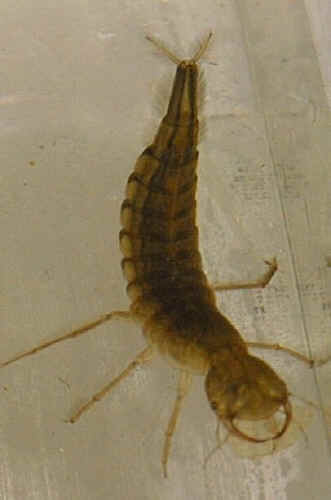
Just a quick look at our growing tadpoles! We had them in a giant container at the side of the house and I had the children looking at them from time to time. Until the children and I realised that something was killing them. One little boy spotted something moving in the water and after further investigation, we found out that the container was inhabited by other "pond" creatures. Our killer was called (as we found out later) the Great Diving Beetles. The children were both devastated it was killing the tadpoles but they were also so intrigued by the "monster" (as one little girl called the beetle).


So armed with our laptop, Tanya and I and the children did a little bit of research and we found out that these larvae are the young stage of a large water beetle. They live in freshwater ponds and are fierce carnivores. They sink their large, pointed, sickle-shaped jaws into their prey. Digestive enzymes are pumped into the body of the prey and the resulting 'soup' is sucked back up. Nice!!! And guess what? Their favourite prey include tadpoles!! But they will eat anything they can catch! We even saw one of them with a poor little tadpole caught in its jaws... So, we decided we couldn't let the beetle kill the rest of the tadpoles. We had to save the remaining ones. I asked the children " what can we do then to save them?". Some offered to kill the beetle. I explained that the beetle was entitled to live just as much as the tadpoles and that it wasn't killing them because it was a nasty bug but because it needed to eat to grow. So some other children came up with the idea to scoop up the tadpoles and put them in a different container and to put a lid on it at night time to prevent any other bug to get in. I found a much smaller bucket,and Operation "Save the Tadpoles" took place. We placed the bucket by the preschool entrance (putting them in a large container was my husband's great idea!!!).


Needless to say that the larvae was not very popular among the kids!! 

Yet, they were completely fascinated by what had happened and by the sight of the larvae.They showed a great sense of wonder and showed good reflection skills and problem-solving skills too, in their attempt to care for their environment.They felt confident that their ideas were taken into consideration and that we, adults, listened to their suggestions. It was also a great practical way to learn how to respect life, any type of life and to learn about their natural environment. The whole learning experience showed them as well that they were well able to interact with other children by listening, duscussing and they all took turns in the conversations, either by offering solutions or by expressing they sadness, their fear or their anger towards the beettle. 

To enhance their learning, I suggest to introduce them to the life cycle of the frogs using the Montessori 3-part cards and learning a bit more about what frogs do using this book below:


Monday, March 16, 2015

Making Bath Salts for Mother's day

Art and craft must be meaningful to the children and meaningful in term of learning. Each craft is usually related to the current theme or topic. This week, as we prepared for Mother's Day, I thought of making salt baths with the children. I gathered all the ingredients necessary for it : Epsom salts, sea salts, baking soda, food colouring and essential oils (orange mandarin).

Saturday, September 20, 2014

New beginnings...

God, it has been so long since I last posted on this blog! But here I am, and I promise there will be much more regular updates from now on. Things have changed a little bit in preschool.

Saturday, September 28, 2013

The Little Red Hen

If you have read my last post (here), you know how strong I feel about fairy tales. So, two weeks ago, we started reading the Little Red Hen as its moral teaching coincides with what we are working on with the children this September: work ethics, personal initiative, responsibility and cooperation and much much more.

Monday, September 9, 2013

Planning our 1st provocation

We talked about how we wanted students to interact with our classroom. We didn’t want them to come in and know every day what the block area or the writing centre for instance contained . I want the children to arrive in class and wonder what they will come up with in each centre. the environment must be dynamic and evolve on a regular routine. Don't you agree that thanks to such a classroom, the children's interest and curiosity will grow?  I have never put all the materials out at the beginning of the year. I gradually add, remove etc.. depending on the children's learning pace and their interests too. This is another aspect of creating a dynamic teaching environment.  I have learnt that each year bring us a "bunch" of different kids who love doing things completely different than the past pupils. What Reggio teachers often do as well is add a new game/toy/apparatus etc.. and let the children discover it themselves.

From what I have studied so far, one of the most important concepts of the Reggio Emilia Approach is the "provocation".   What I understand (and please correct me if I am wrong) is that a provocation could be an image, an object, a group of images or a group of objects. It could be a sound, a series of sounds, a piece of music. It could also be any event or experience that leads to more discussion, curiosity, excitement...  Provocations can be pre-planned, structured and arranged while some of them are more open-ended.

So, I have been re-thinking activities in our classroom. I want them to be about exploration and discovery through their senses. I want the activities to prompt the children  to ask more questions, to plan and to think deeply. To do so, I have to observe what the children are interested in or at least guess. I have to take into consideration what they already know and then plan the activity.
 
 
Here is the 1st provocation I set up. I had noticed the children looking at themselves in the various mirrors in the classroom. They have also been quite drawn to the writing centre to colour. I assumed that exploring a new art medium would be a great idea and I presented a mirror in the writing centre. I sat at the table beside a child and observed. It didn't take the child very long to start making faces in the mirror and start laughing saying : "look, this is another me and it is doing all what I am doing!".. So I prompted the child a bit further and asked him to describe himself. When he said he had brown eyes, I asked him if we had the same colour in our crayons basket. When he said he had dark yellow hair, I repeated the question. We moved on to the skin and the lips colour. Finally, I asked him what shape was his face? His eyes? His mouth? And the rest followed:


And funny enough, once we were finished, we had a group of children waiting for their turn to "draw themselves"!! Brilliant!
 
At circle time, I reinforce the concept of identity and we talked with the children about how there are things about each of them that are the same and there are things about each of them that are different. We had all the preschoolers with blond hair to stand up ,all preschoolers who have brown eyes to stand up. And we also read:

    • I'm Glad to be Me by P.K. Hallinan
    • I Know What I Like by Norma Simon


Thursday, May 3, 2012

Wild beasts in our garden.....

Nature is at our doorstep. Though I do not have the facilities to bring the children on a nature walk, we are still able to observe nature and its wonders. Last week, we discovered this baby trush fell off the tree and of course, we had to try to rescue it. We placed it in a box and the chick drank from our eye dropper. The kids went looking for worms and screamed out of delight when it finally swallowed a whole wiggly worm!!! This was a great lesson on how to look after animals, what they need and where they get their food.


Unfortunately, our little bird didn't survive! Some of the children were a bit upset and asked quite a lot of questions such as "why didn't its mam come to help it? Where is it now? Why did it die because we gave it food?". I tried to answer all their questions as clearly as possible. When explaining to them what happened, I used the words "death," "dead," "dying" instead of euphanisms. These are all concrete words that children can wrap their brains around. Being clear is important I think because children's minds may extrapolate harmful connotations from sugar-coated explanations! I remember when myparent stold me years ago that my dog had to be put to sleep. When we got a new dog, I wouldn't let it go asleep at first because it was now my understanding that if I put him "to sleep", I wouldn't see it again!. This little chick in our garden was one of my teachable moment! Experiencing death and talking about it empower children to handle grief in the future. It also gives them a glimpse at a full life cycle.

On a more positive note, we now have 11 rabbits in our hutch and run!! A little bit overcrowded. The chidren have been witnessing the babies' growth and believe me, they are growing quick!! We are currently trying to find a home for every single one of them! They are soooo cute!!!


And of course, I have used this opportunity to present the children with another little exercise in our classroom: classifying animals. Pets or Wild animals? This turned out to be quite a popular activity. The chidren love looking at the photos and share their knowledge and preferences with their peers as they study each picture. This is great for their social and language skills!!!


Tuesday, May 1, 2012

Life Cycles

Following on my last post on Montessori Cosmic Education, I want to show you one of our exercises in botany and zoology: the life cycles friezes. I find them SO easy to use and they are really popular among the young ones. I didn't say they were easy to make though!! I use  pictures mounted on white card and taped them together using that type of sticky back plastic book film to make a frieze.. Believe me, it is sticky!! Anyway, the idea behind that type of material is To understand that it shows clearly that life goes in cycles (as you unfold the frieze) and that things change all the time. It also reinforces the child's knowledge and understanding of living and non-living things in nature.

This is quite an easy exercise. I show the child one of the frieze she/he has chosen and discuss each picture with him/her, introducing new words and expanding his/her vocabulary. Once we have done that, I introduce the child to the 2 part cards I made to accompany the frieze. First, I show the child how to match the cards  to the pictures on the frieze. If the child is confident enough, I let him/her use the name slips and match them to the words on the frieze too. It doesn't matter if the child can read or not. If he doesn't read, he simply matches the words together. SO this is a double exercise: zoology (life cycle), literacy (words recognition/letters recognition) and maths (matching skills)!!!

The frog lyfe cycle


An apple life cycle


There are other ways of presenting life cycles to children. Simply use pictures or drawings on white laminated cards and ask the child to put them in sequence:


Here another way to do it: 2 A4 laminated cards. The child reproduces the first cards using pictures and name slips (sorry about the pictures being all sideways. It won't come right for me!!):

Friday, March 23, 2012

More Easter activities....

Here are a few more of the Easter activities we have on our shelves:

This Math activity helps the children to reinforce their knowledge of numbers 1-10. I made these cute little egg jigsaws last year.  I printed some backgrounds and cut them out in the shape of an egg. Each egg is cut into halves. I placed white stickers on one half. I wrote the corresponding number on the other half (from 1-10). Finally, I laminated all the pieces . The children have to count how many stickers there are on one half and match it to the right number. What is the control of error? once they have matched 2 pieces, they turned them over and check if the printed patterns are identical.


When the child is emptying the basket, he/she must place all the halves with the stickers and the numbers facing up.


Then the child proceeds to count the stickers...


.... and matches the half with the stickers with the corresponding half. He/she turns the full egg with the pattern facing up. This is what it looks like when the exercise is completed:


Here is a cutting activity I used last year too. I created some strips with Easter patterns. The children must cut along the lines and then use the glue stick. This is actually quite a popular exercise at the moment.


Of course, I have also added the activities we had on our shelves last year. You can see them here and  here. Still more to come. So keep in touch...

Wednesday, March 14, 2012

Working hard here!!

I thought I would put together a few photos again to show you all what the children are working on in our classroom at the moment. So here it goes:

  •  Literacy
Children learn at different pace and while some children are still struggling to recognise their own name among others, others are able to write theirs all on their own. Different activities are being provided for each individual child to help him progress at his/her own pace (I refer you here to all of our literacy activities). Here are a few activities I wanted to share with you today:

Sandpaper letter and our salt tray

This activity requires the child to find the letters of his/her name and stick them all in sequence on a coloured card:


  •  Maths
In Maths, some children have been introduced to new materials, bringing them forward in their learning of the numeral system (again I apologise: some of the photos came upside down and I can't sort the problem out!!):

In the following photos, the child is introduced to the units, the tens, the hundreds and the thousands using the Three Period Lesson (this is..., Show me... and What is this?). This exercise not only introduces the child to big and small quantities but also gives him/her a visual representation of bigger quantities.

The golden bead material

"This is 10..."

"This 100.."

"This is 1000..."

Here we are working with the counting rods to introduce the child to the concept of adding. This activity provides a controlled exercise for teaching number bond.


First, I ask the child to lay one set of the small rod on the top left corner of the mat and to lay the other set on the top right corner of the mat. I then give the child a sum: 3 + 2. I show him how to take the rod representing 3 from one set and the rod representing 2 from the other set. Both rods are laid side by side horizontally in the middle of the mat. I shows how to count the sections on the rod to make 5. This is a great oral sum exercise.


To practice number 1-9, the children use the Hanging bead stair. The child counts the beads on each bar, places them in sequence and finds the corresponding numeral cards or vice versa.


Here is another exercise with the short bead stairs. I use it to teah the children the concept of "taking off" (i-e subtracting). The child must build the bead stairs first in a triangle at the top of the mat. I then give him an operation (6-2 =?). The child takes the lilac bead bar (representing 6) and counts back starting from the right. I show him/her how to cover 2 beads and invite him/her how to count how many beads are left to find the answer.