Showing posts with label animals. Show all posts

Friday, October 14, 2016

We are going on a bear Hunt

One of the children's favourite books in our classroom is We are going on a Bear Hunt. They love the chanting rhyming tone of the text, the pictures, the repetitive and therefore predictive actions.. So we often use this story to introduce our topic on bear and hibernation. Here are a few examples of our classroom's activities based around the book.

Language /Communication:  Using props 

At circle time, once the children were familiar to the story, we introduced the props to add another twist to the story telling experience. 


Thursday, March 31, 2016

Animal Atlas


Over the past few weeks we have introduced the children to the map of the world. They have learned to differentiate land shapes from oceans and have learned the names of each continent. Each continent is colour coded in a Montessori classroom. This helps the children to remember which is which a lot easier and they now can point at each of them on the map at circle time without any hesitation. The next step was to teach them some characteristics unique to each of the continent.

Tuesday, January 28, 2014

Small world play ideas

I wrote a little bit before on the value of Small World play (SWP) last August. SWP is imaginative play where children are provided with a small world for them to use as a canvas to transfer their thought, their ideas and their experiences.

Wednesday, January 15, 2014

Maping the world with our animals

In our classroom, we have collected many “continent boxes” over the years. We use them as an addition to our traditional Montessori folders. We have been lucky enough to swap items with many friends across the world and in each box, we have little collection of plastic animals. It just occurred to me one day as we were learning about the continents, that I could gather all these animals and use them in conjunction with a large floor world map. The children have been studying the continents for quite some time, they are now quite familiar with their names and shapes and colours. The idea is for the children to explore the map of the world, and in particular the countries of origin where the animals come from. I am working on a felt map to use but this is a slow process as I am not great at sewing! In the meantime, we are using the Montessori world map.  I use 7 little boxes colour-coded according to the continents on the Montessori world map.  Each little box contains plastic animals from each continent. As you can see below, I simply used plastic washing soap liquid dispensers to store the animals. I had boxes but they were either too big or too small, while some were made out of wood, wicker or plastic.  I wanted something a bit more uniform but I didn't want to go and spend too much money. I suddenly realised that I had been "collecting" theses dispensers in my utility, so...voila!


How does it work? I  invite a child to work with me and I point first at the colour code on each box. I ask the child to match the colour to the corresponding map and ask them to remind me of the name of the continent. The child works with one box/one continent at a time.


When he is finished, the child must tidy up, one continent at a time, placing the animals in the right tub.
 

The aim of the activity is to look at the countries of origin of many animals the children are familiar with, thanks to their interaction with our continent boxes. The exercise requires the child to isolate maps, to identify them on the world map, giving him/her a sensorial impression of the positions, shapes and sizes of each continent. This activity is a great revision of the continent and their names, as well as a good introduction to the animal kingdom. It also helps some of the younger kid with colour recognition. And though the activity is presented and played on a one-to-one basis, it proves to be a great team work as  all kids LOVE to use the animals that way and talk about them. So not only this activity links zoology and geography but it also helps children to expand their vocabulary and engages them to converse and think.
 
I just need to add more animals to represent marine zoology and I am lacking animals for South America and Asia. In the  progress!


Monday, December 9, 2013

Pass the bear, 12,3...

This month, we have talked about BEARS, BEARS, BEARS.
 
First, I integrated a bit of science in the curriculum and I made up a little book showing the children the different types of bears, their body parts, their habitat and what they eat. Circle times have never been as quiet as when we opened up this simple informative DIY book!! Kids were mesmerized and I was amazed at how spongy their little brains were: after just one day, they could remember the names of most bears pictured in the booklet.


The last page of the book pictures a teddy bear. It was a wonderful opportunity to compare real bears vs fantasy/fictional bears.


We then read Goldilocks and the 3 Bears. It's a wonderful tale teaching children about respecting other people's property and  having good manners. But it also gave us the chance to compare real bears with fictional bears. I asked the children to think what real bears could do: hunt, sniff, eat, run, fish, hibernate. They don't have houses, clothes or furniture. they have claws, fur and sharp teeth. What about the 3 bears? They can climb stairs, they can use spoons, chairs, they can talk. They act like real people but they are "pretend".
 
Each time I read the story, I ask the children to guess what was coming next in the story. By the end of the week, they were able to use the terms of "big/middle-sized/small" with ease. They were able to grade paper bears in their work copy from big to small, allowing us to cover part of our maths curriculum too.
 
 
Oh, and did I forget to say that we had a teddy bear picnic? So much fun!!  I asked the kids to bring their favourite bears to school on Friday. What a great selection! The kids really loved it! It was our first time doing it . it was so simple to organise and so popular. I never thought the children would have shown so much joy!


For maths, we also placed our bears from bigger to smaller...
 

And of course, as we had been learning about hibernation, we made beds for our teddys. Some of you might think it is a bit far stretched but it works well with children. As we studied real bears and pretend bears, the children were well able to explain that these beds were not the real habitat of big scary bears. It was just a bit of fun and imagination mixed to our nature studies... The children provided empty shoe box and decorated them. We then filled it in with shredded paper (I apologised for the mess it may have caused at home afterwards!! ooooppps!) and made little pillows out of socks and old fleecy jumpers. And let's not forget blankets!!


And to finish the day, we played a new game: "pass the teddy bear". The children sat in a circle and passed a stuffed bear around the circle when the music was playing. When it stopped, the child holding the bear went to sit in the middle and stayed there until he/she was replaced by another child once the music had stopped again. We also chanted "pass the bear, pass the bear, 1, 2,3,4,5,6,7,8,9,10".. Great little practice for counting..


Tuesday, January 31, 2012

Animals and Winter

We are currently  talking about winter animals in our classroom and I introduced a few new exercises.


First, I added a tray on our literacy: drawing a penguin. I made up a little booklet showing the children how to draw a penguin from scratch. Every time they turn a page, they add to their sketching until they have a cute little penguin looking at them!


The children have also practiced their writing ( I got the sheet from KidsSoup). First they had to trace around the outline of the penguin. once they were done, they coloured it.


And finally, they cut out the template. I then used cello tape to stick a wooden lollipop stick at the back of it to create a little puppet. Unfortunately, I forgot to take a picture of the end result. But you get my drift. And believe me, kids got so excited with their puppets... They made up stories about lost penguins on an iceberg.. Look out, here is a killer whale. It was fantastic to see all the facts they have learned about Antartica taking life in the classroom!! (By the way, I will post about our study on Antartica! I just haven't got around it yet. But as you guess, penguins would be a huge part of our continent study. Themes overlap quite often and this is just an example).


  (TUNE:  Twinkle, Twinkle, Little Star)
Penguins, penguins having fun
Waddling in the winter sun.
Waddling fast and waddling slow,
Waddling to and waddling fro.
Penguins, penguins having fun
Waddling in the winter sun.


What else?
We  have added  an animal tracks game (I downloaded i from Montessori for Everyone.  I introduced this work at group time and showed the children each animal and its track in the snow or in the mud .  I colour coded the picures with stickers placed on the back of the tracks and the animals. Control of error is a key startegy in all of Montessori materials and it was important to le the children work on their own, once I had shown them how to work the cards.


And we have made our bird feeder too!! What a husstle and bustle around this activity this morning! This is the 3rd year I am making bird feeders and this is always such enjoyment. We have talking about birds and what happened to them during winter. I have left some old binoculars on the shelves for the children to observe our garden birds as they fed on the nuts I regularly put outside. They have learnt the names of  Blue Tits, Great Tits, Tree Sparrow, Robin, House Sparrow.  So this was a nice conclusion to our study.

So here is how we made our bird feeders: first, I collected as many as I could and had them drying and opening up on my stove.


Next, I gathered pine cones, string, peanut butter and bird seeds. I poured all the seeds in a huge bowl, tied the string around each pine cone and helped the children to cover their cone up with peant butter (before you do so, you need to make sure none of your children have nut allergy. Thank god, this has never happen yet in our classroom. If you cannot use peanut butter, use lard.). Have the children roll te pine cones in the seeds and pat the seeds properly. This is a great sensorial activity: the feel of the seeds between their fingers is quite an experience and many of them were giggling as they plunged both hands in the bowl!! Just check the photos I took last year right here.

That's it for today! See you soon!


Saturday, November 12, 2011

Are you asleep bear?

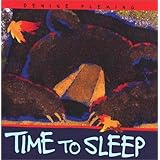
I am back!! Sorry it took me so long to find the time to write about our little adventures! There is just not enought time in a day for me! Anyway, we are currently completing our Autumn theme and I have introduced the children to the notion of hibernation. At circle time, I explained  them what animals were up to in Autumn time in preparation for the long winter months. First, I read them Time to Sleep by Denise Fleming. It is a wonderful spring-board for class discussions and "acting - out" activities!

Product Details

Then I present them to a poster my daughter made for school project. I still look at it with very fond memories of the time we spent together making it and it has proven to be very useful in our classroom. It helps the children to visualise exactly what I am talking about as I read the book to them.


One of the kids favourite game related to the theme is  called "Animal, Animal, who are you?". The children sit in a circle.  One child sits or stands in the center and acts out the movements or makes the sound of an animal.   The other children raise their hands to guess what animal the child is imitating.  The child who guesses correctly then  acts out another animal.  You may want to have the child in the center whisper the name of the animal to you  before acting it out.  Then you can be sure the child has the animal clearly in mind, and you can help the child is necessary.

My little man was back from primary school that afternoon and was delighted to be able to start the game! Guess what he was...


And I love to introduce a variation to our Musical statues game (when the weather doesn't allow it outside, we move the tables around in the classroom and play inside). I call it the Musical Hibernation game. All you need is a CD player and mats. Have a mat for each child. Explain to the children that while the music is playing the animals(them) are dancing. When the music stops it is winter time and it is time to find a spot to sleep. As the children know more about hibernating animals, you can ask them what animal they are when they sleep too.

Another game I have up my sleeve is to bring the kids outside and tell them we are going to pretend there is  a bear hibernating in our garden, and we have to find it to make sure it stays safe (of course, we will have to make sure they grasp the notion that this is only pretending!!!). I was planning to do this game this week but unfortunately, it has been so wet that we haven't been able to go out at all.  The activity is based on the book We are going on a bear hunt. I read the book to the children beforehand (this is one of their favourite book and they know the words nearly by heart!).

Product Details

What I am planning to do is first to chant our Bear Hunt song and invite the children to follow me as I go off on the bear hunt. We sing the little song from the book. We act out each line as we go. For example, when we say "we are going on a bear hunt", we all pretend to have binoculars! When we are singing about going throught the thick mud, we exaggerate our movememnts and lift one foot heavily, one after one, pretending to be stuck in the mud. 

I have one more activity planned for the HIbernation theme but I need good weather. SO I will kepp you posted as soon as we are lucky!!!! Keep in touch...  


Monday, March 14, 2011

Pine cone feeder


I know it is spring but believe it or not bird feeding isn't just a winter activity; it is still freezing outside these days, which means that many insect populations haven’t emerged. So, basically, food is still scarce for our feathered friends.

This is an activity I meant to do during our winter month but for some reason, it never happened. So this week, as we talk about animals in Spring, I also remind the children of our garden friends. The children  made some bird feeders to bring home today. But I will make sure to make some for playschool too with my own kids to provide them with the opportunity to watch them and match them to a series of cards I have made myself (clap hands!). I have used actual photographs of birds visiting our playschool garden here in the South east of Ireland. These cards are a great identification guide for them. Each picture are labelled for pre-literacy purposes. 


Below are the photos of the children during our activity.

We are blessed here with the surroundings we live in: a rugged seashore with sandy beaches basically at our door step and a colourful site surrounded by big tall pine trees. Nothing else but  fresh air. An idyllic little spot to teach the children about nature! We have LOADS & LOADS of pine cones to pick up right at our feet. So we are using them to create our bird feeder. (Sorry the quality is not the best but I am waiting for my husband to buy me a new camera!!)


We collect that amount of  pine cones everyday..


Last year, I used peanut butter exclusively. Yet, this year, I have one child who has food allergies. For this reason, I used stork instead(vegetable oil fat) and it worked just as well!  And I have been told it is also better for birdies: peanut butter can get stuck in their gizzards, while butter provides lubrication!! You can also use lard.Clever!

So this is how we did it:


We tied some twine around the pine cone

Job done... Next ...

We buttered the stork all around the cone

Then we rolled the pine cone into our bowl full of feeds..

Et voilĂ !!