Showing posts with label Identity & Belonging. Show all posts

Saturday, February 4, 2017

Activities encouraging "Positioning schemas"


We have been observing the children very carefully these past few weeks to identify the schemas  in action in our classroom in order to learn more about each child's personal learning process. 

Schemas are patterns of repeatable behaviour the children use to test out ideas and to make sense of the world around them. Once a schema is identified, it is very important to offer the child appropriate activities which will nurture the patterns allowing the develop and progress of learning. 

After a few weeks of careful observations, it emerged that a group of younger kids in particular shared the same schema called "positioning". The children love lining up toys or placing objects in very specific ways . It does not necessarily follows the logical thinking process  of an adult but it seems to make complete sense to their little minds.  And I dare you to try to "reorganise" everything... Tantrums may follow, tears or screams of frustration. We have observed children positioning, ordering and arranging objects sometimes in very obsessive manners. They sometimes line them up in order of size, colour or shape or texture too. They also love "stacking" activities: cylinders, blocks, lego, cubes, animals on top of each other, books etc... Some of them also like their food to be placed in a certain way on their table mat and they can be very particular about it. Or they may not like if certain type of food is touching. 

Keeping this schema in mind, we had a look in our classroom to make sure the children had enough opportunities to play and learn . Below, are a few of the "Positioning" activities children are presented with or can choose from in our setting. These activities are usually loved by smaller children and though the materials themselves might have a more direct objective (such as counting and representing quantities or matching colours), we let the children in a "positioning" schema use them freely. They just enjoy placing the counters in a certain way. Later, as their learning expand, they will start using them in the way they are meant to. 


This game is supposed to help children learn about following patterns with colours and shapes. Many of them just love stacking the beads onto the rods, following their own design.


Some children also like lining up the crayons. As simple as this. 


This is not the right way to use the Montessori Pink Tower but here again, you need to step back and recognise the child's schema and allow him to test his ideas. Observe the need for lines, order and association in the picture. 


Our bear counters are a favourite. We use them with the wooden grid to associate numbers and quantities or to categorise them by size or colour. But children make their own rules, placing the bears in the way they like. 


The Montessori Brown stairs is often used by little ones in a "positioning" schema. Here, it has actually been used correctly but the little girl decided to use other material and is placing them on top of the stairs in a manner that allows her to problem-solve, question, predict, imagine, speculate and develop independent choices as she was making decisions in an area she was familiar with.


Blocks can be lined up, stacked up. We have coloured blocks and natural colour blocks. Children use them to build anything. They sometimes choose to place them in a certain order that make sense to them, mixing them up with other blocks or other materials. It may seem random to you but the fact is that children use that type of play to develop a methodical, systematic and logical collection of information through heir senses and their movement. 


Here are a few more examples of classical positioning schema:


We also use our sensorial table as an invitation for "positioning". Last week, keen on creating further experiences, I filled our table with all sorts: wooden dice, plastic letters and numbers, bear counters, plastic counters, wooden beads, etc... I place a sorting wooden tray on the opposite side of the bin and let the magic begin. The children were immediately attracted to the activity. I didn't give them any directions but let them explore the possibilities themselves. Some recognised the potential for categorising or sorting. The younger children enjoyed choosing a place for each item, deciding on placing one or two or more items together, on top, beside etc... 


What else do you do in your classroom to support the "Positioning" schema?


Thursday, November 10, 2016

Scaffloding preschoolers' early writing skills

Providing young children with rich writing/drawing experiences lays good foundations for literacy learning. Scaffolding preschoolers' early writing skills is of paramount importance. But the diversity of skill levels can sometimes present a challenge. Some children are still at the stage of scribbling while others are drawing neat pictures from their imagination. Some are still colouring or drawing while others have started making "signs" or formed "letters". So what could I do to encourage my children, support their development level and shape their learning experiences? I took a step back and observed the children in my classroom. One little girl, one day, was playing with a small Montessori numeral rod a wooden box turned upside down. She told me she was drawing! And it hit me. Diversifying writing materials as often and as much possible was a must. Crayons, paint, markers, chalk are a great start but what about the canvas? It doesn't always have to be paper or card. Just gather materials, present it to the children and let them use their imagination. Let them use the materials whichever way they want without preconceived ideas or expectations. Then the possibilities are endless, really, and so are the learning experiences.

Tuesday, October 25, 2016

10 timid Little Ghosts - Props

We have been reading 10 Timid Ghosts by Jennifer O'Connell for the past 2 weeks in the classroom. The children love this story. I guess the story has mesmerised them because it represents everything scary about Halloween: witch, ghosts, cats, rats, vampires, skeletons etc.. It is spooky without being frightening and it got their attention straight away. The rhyming and repetitive prose is catchy and easy  to memorise making it fun, while the illustrations are really colourful and detailed. 

Friday, October 21, 2016

Naming clouds...

As we were berry picking the other day, a little boy stood quite still in the middle of the field, looking up to the sky. I asked him what he was looking at. He said he could see a funny cloud shape in the sky. I looked up and asked him what it was shaped as. He simply said it looked like a big marshmallow!! Other children joined in when they saw us and we all had a game of "guess what my cloud looks like"! We saw dogs, circles, superheroes etc...Imagination had no limit. The following day, at circle time, I showed the following video to the children. It is based on a book called "it looks like spilt milk" by Charles G. Shaw. The children loved it as it was an extension of what we had done the day before. 


Wednesday, October 12, 2016

Berry picking and cupcake baking!

We read "Rufus and the Blackeberry Monster" by Lisa Stubbs to the children last week.


Shortly after, 2 little girls got very inspired and decided they were going to bake a pie too, just like Rufus's Mam in the story. I watched them getting busy in the home corner.

Sunday, May 1, 2016

Learning French in the classroom

Over the past few weeks, I have started teaching a few words in French to the children in my classroom. The response from the children was actually quite amazing and I never expected them to take to it so well and so easily. I used the format of our circle time to start teaching them how to say hello, good-bye, "my name is.." and at the moment we are learning numbers.
To make it more interesting and to enrich the learning experience, I started researching the web for resources or ideas And I thought "why not sharing it with you all"?

Monday, March 16, 2015

Making Bath Salts for Mother's day

Art and craft must be meaningful to the children and meaningful in term of learning. Each craft is usually related to the current theme or topic. This week, as we prepared for Mother's Day, I thought of making salt baths with the children. I gathered all the ingredients necessary for it : Epsom salts, sea salts, baking soda, food colouring and essential oils (orange mandarin).

Wednesday, January 15, 2014

Maping the world with our animals

In our classroom, we have collected many “continent boxes” over the years. We use them as an addition to our traditional Montessori folders. We have been lucky enough to swap items with many friends across the world and in each box, we have little collection of plastic animals. It just occurred to me one day as we were learning about the continents, that I could gather all these animals and use them in conjunction with a large floor world map. The children have been studying the continents for quite some time, they are now quite familiar with their names and shapes and colours. The idea is for the children to explore the map of the world, and in particular the countries of origin where the animals come from. I am working on a felt map to use but this is a slow process as I am not great at sewing! In the meantime, we are using the Montessori world map.  I use 7 little boxes colour-coded according to the continents on the Montessori world map.  Each little box contains plastic animals from each continent. As you can see below, I simply used plastic washing soap liquid dispensers to store the animals. I had boxes but they were either too big or too small, while some were made out of wood, wicker or plastic.  I wanted something a bit more uniform but I didn't want to go and spend too much money. I suddenly realised that I had been "collecting" theses dispensers in my utility, so...voila!


How does it work? I  invite a child to work with me and I point first at the colour code on each box. I ask the child to match the colour to the corresponding map and ask them to remind me of the name of the continent. The child works with one box/one continent at a time.


When he is finished, the child must tidy up, one continent at a time, placing the animals in the right tub.
 

The aim of the activity is to look at the countries of origin of many animals the children are familiar with, thanks to their interaction with our continent boxes. The exercise requires the child to isolate maps, to identify them on the world map, giving him/her a sensorial impression of the positions, shapes and sizes of each continent. This activity is a great revision of the continent and their names, as well as a good introduction to the animal kingdom. It also helps some of the younger kid with colour recognition. And though the activity is presented and played on a one-to-one basis, it proves to be a great team work as  all kids LOVE to use the animals that way and talk about them. So not only this activity links zoology and geography but it also helps children to expand their vocabulary and engages them to converse and think.
 
I just need to add more animals to represent marine zoology and I am lacking animals for South America and Asia. In the  progress!


Saturday, September 14, 2013

Expanding the lessons of the Kissing Hand

One of the books I like to use at the beginning of a school year is the Kissing Hand. It's about a little raccoon Chester who doesn't want to leave his mother to go to school.

Monday, September 9, 2013

Planning our 1st provocation

We talked about how we wanted students to interact with our classroom. We didn’t want them to come in and know every day what the block area or the writing centre for instance contained . I want the children to arrive in class and wonder what they will come up with in each centre. the environment must be dynamic and evolve on a regular routine. Don't you agree that thanks to such a classroom, the children's interest and curiosity will grow?  I have never put all the materials out at the beginning of the year. I gradually add, remove etc.. depending on the children's learning pace and their interests too. This is another aspect of creating a dynamic teaching environment.  I have learnt that each year bring us a "bunch" of different kids who love doing things completely different than the past pupils. What Reggio teachers often do as well is add a new game/toy/apparatus etc.. and let the children discover it themselves.

From what I have studied so far, one of the most important concepts of the Reggio Emilia Approach is the "provocation".   What I understand (and please correct me if I am wrong) is that a provocation could be an image, an object, a group of images or a group of objects. It could be a sound, a series of sounds, a piece of music. It could also be any event or experience that leads to more discussion, curiosity, excitement...  Provocations can be pre-planned, structured and arranged while some of them are more open-ended.

So, I have been re-thinking activities in our classroom. I want them to be about exploration and discovery through their senses. I want the activities to prompt the children  to ask more questions, to plan and to think deeply. To do so, I have to observe what the children are interested in or at least guess. I have to take into consideration what they already know and then plan the activity.
 
 
Here is the 1st provocation I set up. I had noticed the children looking at themselves in the various mirrors in the classroom. They have also been quite drawn to the writing centre to colour. I assumed that exploring a new art medium would be a great idea and I presented a mirror in the writing centre. I sat at the table beside a child and observed. It didn't take the child very long to start making faces in the mirror and start laughing saying : "look, this is another me and it is doing all what I am doing!".. So I prompted the child a bit further and asked him to describe himself. When he said he had brown eyes, I asked him if we had the same colour in our crayons basket. When he said he had dark yellow hair, I repeated the question. We moved on to the skin and the lips colour. Finally, I asked him what shape was his face? His eyes? His mouth? And the rest followed:


And funny enough, once we were finished, we had a group of children waiting for their turn to "draw themselves"!! Brilliant!
 
At circle time, I reinforce the concept of identity and we talked with the children about how there are things about each of them that are the same and there are things about each of them that are different. We had all the preschoolers with blond hair to stand up ,all preschoolers who have brown eyes to stand up. And we also read:

    • I'm Glad to be Me by P.K. Hallinan
    • I Know What I Like by Norma Simon


Sunday, July 8, 2012

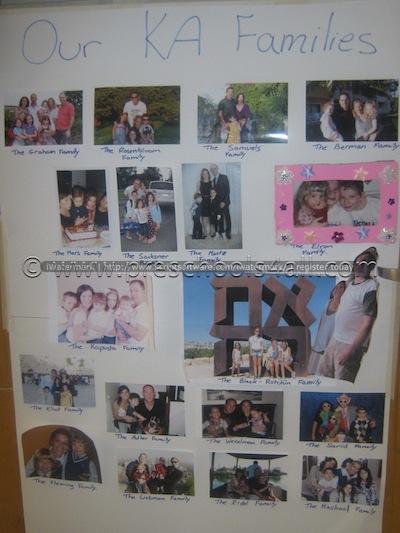
The Family Wall

I got news last week that I passed my couse on Equality and Diversity with high distinction. I was happy but I thought I would share with you all what had happened during the course of our last workshops. Maybe some of you will comment and let me know what they think.

At some stage during this last workshop, the use of a "family wall" was mentioned, as a tool to promote self-esteem. What is it? The children bring a picture of their family to school and we put them all together on a wall in our classroom and refer to it regularly. I have used a family wall in my setting since the very first year I opened up (I should have had a post written about it but for some reason, I never took the time to do so) . I was quite pleased to see that it was highly recommended by the Anti-bias Approach as a tool to promote inclusion, identity and a sense of belonging for all the children (and their family). I have since learnt in more details  to realise that when children feel that their relationships with their family, friends and community are valued and recognised, they feel more secure, more included and respected. So high 5 for me! I have been working in the right direction! The course has shown us how important it is to try to get to know each child individually. It was obvious to me from the beginning but the training voiced my beliefs loud and clear and reassured me that I was indeed being respectful in a very powerful way. Children love talking about their parents and what they do at home or what they do with their siblings. And real pictures are much more empowering than anything else. I love photography and have taken a few course in photography that concurred this statement. This is why I try to work with photos or any other “real” pictures as much as possible. The Family wall is a fantastic means to open up discussions among the children and to make them explore their own identity. It helps children to identify the various types of families in our society and our community: single-parent family, families living with the grandparents, divorced/separated parents etc… I also found that it is a great way for Rachel and I to get to know the parents better and to connect with them as they come in and have a look at our family wall.

During the discussion with other practitioners, I was asked if I could think of any other benefits of the family wall. I explained that we use it straight away in September to make the connection between home and the preschool. It is used as a bridge to reassure newcomers. If they are missing their mams or dads, we show them the wall and let them talk about their family. However, when I mentioned that we don’t keep the family wall on our wall in the classroom all year long, our tutor objected strongly, vehemently insisting that I HAD to keep it up all the time. I disagreed explaining that it was my own experience (and Rachel’s) that children get “bored” of the Family wall after a while and don’t actually look at it anymore, which usually prompt us to move on to another inclusive way  or activity to promote identity and belonging. For example, this next September, we are going to use a teddy as a little mascot and we will ask each child to bring it home with him/her and take pictures of something that he/she did with the teddy during their daily routine. We will get the parents on board and provide them with a little camera. We will ask parents to write a quick summary describing the picture they took together. Once each child has had a turn with the teddy and the camera, I will have the pictures printed and I will bind them in a little book with all the corresponding notes. I really hope that this will be popular among the children and the parents. And you can be sure to find a post about this next September or October.  Anyway, this was one of the example I gave our group.

Yet, our tutor that day blatantly criticised my decision not to have the wall up all year long. She didn’t give me much chance to express myself and the other practitioners were basically asked to side with her or with me!  I found it very peculiar as we have been talking all along about accepting other people’s opinions and ways. After all, isn’t it what the course is about? It was shocking to be honest. Being trained in equality and Diversity has taught me to be more open and to be reflective. We have worked very hard to critically assess ourselves and to ditch our blinkers. This course is only a beginning for all us but little steps matter as Louise Derman-Sparks mentioned in her article “Education without prejudice”. Yet, I truly and honestly believe that I am doing the right thing by diversifying my approaches in the classroom to ensure the children feel included, valued and respected. I am not a one-trick pony and there are many other ways to reach these goals.  I felt chastised for not using the family Wall all year long. So this knocked me a little bit off course and confused me. I expected the journey on this course to have its ups and downs but this “incident” rattled my confidence and got me thinking “am I doing it right? Am I completely off the rails?”. Since that day, I have been thinking and I stick to my guns. The Family Wall is a wonderful tool but it wouldn’t work in our setting if I was to leave it up all the time. We need diversity too in the way we approach the topic!

see my post "Inclusive practice is good practice" right here.


Thursday, April 19, 2012

Inclusive practice is good practice

Inclusive practice is good practice. What does it mean? Well, to us, preschool teachers, this means working with each child to help them build their self-esteem: listening to them, encouraging them to talk about themselves, and giving them the opportunities to express themselves. This also means asking the children to talk about how they feel, how they look, what they enjoy, who they are within their own family, what origins they come from, who their friends are etc.. This creates a sense of identity and belonging, which is exactly what Louise Derman Sparks highlighted in goal 1 of her Anti-Bias Approach.

Activities that allow preschoolers to discuss their emotions and better identify and read the emotions of others is a key aspect in building emotional intelligence at an early age, which in the long run, can assist children to grow into discerning adults that can relate to others effectively. Studies show that emotional intelligence is just as important (if not more important) than intellectual intelligence in the workplace, so it is important for young children to learn how best to read the body language of peers as early as possible.   Here is a list of what can be done in a classroom:

  •  Emotion collage: with the help of their parents, children can select photos of themselves in various state of emotions. Once you get the photos, scan the hotos onto printer paper so that the child can cut ou their image and paste them onto a large sheet of construction paper. The children can present to the class what emotions they were experiencing in each photo.
  • Picture cards showing different emotions. use them at circle time and ask the children to pick one of them and explain to their friends why they have picked this one. Some may pick the "sad" picture card and explain that their mam didn't let him finish their picture this morning because Mam was rushing to work. This may seem trivial to us but this i a big deal for a 4 year old!!! You can buy these cards anywhere really, but you can make your own too!!

Encouraging children to share their family life with their peers in the setting make them feel included too. Practitioners can then gradually build on that sense of self and belonging and help the children feel that they are also part of the setting's community, and eventually part of a community out in the world. Having a "family wall" which celebrates "who we are" is a good starting point. Ask the children to bring photos of their parents and siblings and other members of their family as well as pictures of people who are important in their lives (not just blood relatives). 

preschool lesson plans, my family, preschool theme ideas, preschool themes, preschool theme units, preschool curriculum ideas
(Picture borrowed from Preschool4all)

Here you have a facililty who created a Friendship Wall...


I have to admit that I have never thought about writing a post about our little family wall (we are a small setting!). Shame on me! I believe this is a brilliant way to teach children about what families look like and make them feel included, secured and valued. So there will definitely be a follow-up on this post, as far as I am concerned, next September with plenty of photos.

Some people may be asking themselves why it is so important for children to feel good about themselves. Simple. When you are starving and your belly rumbles and grumbles, can you honestly concentrate on what you are doing? All you think about is food!! Well, this is exactly the same about children. If their basic needs are not met, they can not learn. If a child feels isolated, excluded or not accepted, how can you expect that child to participate in class activities? He won't speak much, won't participate in class activities and will tend to withdraw because he doesn't feel that he belongs, Thus, hindering his learning progress.

Empowering the children is also part of bring an inclusive practice. Empowering supports positive attitudes, cooperative friendships, interactions and curiosity about the world. Empowering children again means listening to the children, respecting them and helping them to think critically. It is about helping children to make up their mind about what is fair or unfair. And it is very important at that stage to help them recognise differences and similarities around them. If children don't spot differences, children might then feel frighetened or angry later on in their young life. It is important also to let children know that if there are things that they don't understand, it's ok to ask questions and to inquire. For example, when children observe a peer with a disability or special requirement, they should feel free and at ease to ask why their peer is behaving a certain way. Staff can reassure them that sometimes, we all need a bit of help. The point is that children learn from one another as Montessori often stated. Children from mainstream backgrounds will learn from a child with a special educational requirements and vice versa. Nobody loses in the process. Everybody gains and moves forward. Some move forward a little bit slower than others. But we all move forward. That's what matters and that's the message children must get. Again, there are lots of activities to challenge the children, make them spot differences and learn to feel comfortable with diversity. For instance, at circle time, ask them to say something nice about the child sitting beside them: "I like Joe's hair, I like Susie's shoes, I like Robby's glasses" etc... Don't be surprised if one of them decide to say that he/she doesn't like his/her own hair. I will refer you here to one of the activities I did with my children at thebeginning of the year, called "The best part of me" during which I asked the children to think about a part of their body that they liked the most. Another great way to promote self-esteem.  You could also decide to compare hands at circle time.


Ask the children to lay their hands flat on the floor and compare skin tones, nails, finger lengths, hands size, nail lengths etc...

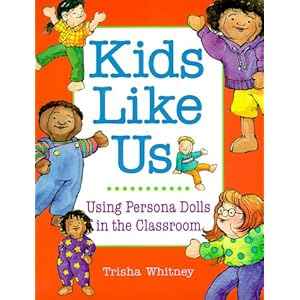
The use of persona dolls is also becoming quite popular to challenge stereotypes and counter discrimination. Pesona dolls encourage children to empathise and solve problems the doll is experiencing. To enable the childrento bond with the doll and identify with it, the doll is given a persona (a name, personality, lifestyle, family, cultural background ..). Once they have been introduced to the doll, the children listen and react to stories woven around the dolls.
    Kids Like Us: Using Persona Dolls in the Classroom

I knew this post was going to be quite long. So I will stop right here and will write the second part of his post later on. These are some of my recollections as I reach the end of my Equality and Diveristy course. I hope they inspire you too.....


Monday, April 2, 2012

Easter Bonanza!!!

Holidays have started!! I have TONS of things to do during these next 2 weeks but first thing first. I want to share with you what we have done together last week.

I was looking for a new craft project to do with my children. I can't remember where my inspiration came from but I googled polka dot fabrics and printed a few of them. I then glued a oval shape in the centre of my patterned sheet and laminated the whole lot. I showed the children how to place glue inside the oval shape and then apply buttons of all sorts on it (making sure to stay inside the shape). Choosing the buttons one by one was the real thrill for the children and they really focused on the exercise.


This is what it looked like once it is dry (I have to say that it actually looks much better in real. The photo is not really good!).


I punched 2 holes at the top of the laminated card and laced a white rubbon through .. and voila!! 


What else? Well, Easter wouldn't be Easter without our traditional Easter tree:


And we went for our Easter egg hunt too. But before we could look for eggs in the garden, I explained the children that I needed them to turn into little bunnies to do the job properly. "But we are children.. we can't turn into rabbits!" exclaimed one little boy, despair in his voice! So I showed them what I had prepared the night before with a bit of card paper (blue, pink and white), double sided tape, scissors and....  patience:


Bunny ears!! Blue for the boys and pink for the girls!! I just had to staple the headband together after measuring their little heads. Look at some of my little bunnies:


Can you find our eggs?


And of course, we made our little easter baskets:


ENJOY YOUR HOLIDAYS LITTLE CHICKS!

Friday, March 16, 2012

Mother's Day....

This is a very busy week end for all of us as tomorrow we celebrate St patrick and on Sunday, it's Mother's Day. We were very very busy in class this week, getting ready for it all. The children were very excited about creating something special for their mam. This is what we did:


The children had to glue the lollipop sticks in place, bepatient and let them dry. Then, they had to paint them and learnt to be a bit more patient!! In the meantime, I took individual pictures of them all, printed and laminated them. Finally, the chidren got to choose some little decorative accessories and glue them upon  their picture frame. I added some magnets in the back for mammies to be able to stick the photos of their little ones directly on their fridges.

And the chilren also made cards for their mams.


A bit of pre-cut coloured paper.


The children glued them inside a heart shape traced on a pink card.


Cute, isnt'it?