One of the books I like to use at the beginning of a school year is the Kissing Hand. It's about a little raccoon Chester who doesn't want to leave his mother to go to school.

Showing posts with label All ABout me. Show all posts
Showing posts with label All ABout me. Show all posts
Saturday, September 14, 2013


Monday, September 9, 2013
Planning our 1st provocation
We talked about how we wanted students to interact with our classroom. We didn’t want them to come in and know every day what the block area or the writing centre for instance contained . I want the children to arrive in class and wonder what they will come up with in each centre. the environment must be dynamic and evolve on a regular routine. Don't you agree that thanks to such a classroom, the children's interest and curiosity will grow? I have never put all the materials out at the beginning of the year. I gradually add, remove etc.. depending on the children's learning pace and their interests too. This is another aspect of creating a dynamic teaching environment. I have learnt that each year bring us a "bunch" of different kids who love doing things completely different than the past pupils. What Reggio teachers often do as well is add a new game/toy/apparatus etc.. and let the children discover it themselves.
From what I have studied so far, one of the most important concepts of the Reggio Emilia Approach is the "provocation". What I understand (and please correct me if I am wrong) is that a provocation could be an image, an object, a group of images or a group of objects. It could be a sound, a series of sounds, a piece of music. It could also be any event or experience that leads to more discussion, curiosity, excitement... Provocations can be pre-planned, structured and arranged while some of them are more open-ended.
So, I have been re-thinking activities in our classroom. I want them to be about exploration and discovery through their senses. I want the activities to prompt the children to ask more questions, to plan and to think deeply. To do so, I have to observe what the children are interested in or at least guess. I have to take into consideration what they already know and then plan the activity.
Here is the 1st provocation I set up. I had noticed the children looking at themselves in the various mirrors in the classroom. They have also been quite drawn to the writing centre to colour. I assumed that exploring a new art medium would be a great idea and I presented a mirror in the writing centre. I sat at the table beside a child and observed. It didn't take the child very long to start making faces in the mirror and start laughing saying : "look, this is another me and it is doing all what I am doing!".. So I prompted the child a bit further and asked him to describe himself. When he said he had brown eyes, I asked him if we had the same colour in our crayons basket. When he said he had dark yellow hair, I repeated the question. We moved on to the skin and the lips colour. Finally, I asked him what shape was his face? His eyes? His mouth? And the rest followed:


And funny enough, once we were finished, we had a group of children waiting for their turn to "draw themselves"!! Brilliant!
At circle time, I reinforce the concept of identity and we
talked with the children about how there are things about each
of them that are the same and there are things about each of them that are
different. We had all the preschoolers with blond hair to stand up ,all preschoolers who
have brown eyes to stand up. And we also read:
- I'm Glad to be Me by P.K. Hallinan
- I Know What I Like by Norma Simon
Wednesday, September 12, 2012
Separation Anxiety.. What to do?
Leaving Mammy can be hard!! Especially if you spend all your time with mammy and suddenly, you ar ebeing asked to stay in a new environmnt with complete strangers and so many little faces !! So managing separatin anxiety can be tough for some kids and for some parents too!! Parents often drop off their little one at preschool with a pit in their stomach, knowing what's coming next: a fit, kicking, screaming and crying, not wanting to be left behind. Parents know this won't go on forever, but it sure feels like it lasts a lifetime.
So what do we do? I always tell parents that the simplest of the steps is to say good bye, which is also the hardest to do. Parents should give their child a hug and a kiss, tell her/him they'll be back soon and then walk out the door. There should be no delay, no more "one more minute," no lingering, hoping that she/he 'll miraculously start smiling and laughing, happy to go and play with her/his preschool chums. But I understand that this can be way TOO hard for some parents to do. So sometimes, we have to employ different strategies. Parents are always welcome to stay with their little ones at the beginning, for an hour, or even a full session if necessary. This helps the child to get used to his/her new environment and get to know his/her teachers. After a while, I usually suggest that it is time to be firmer and to stay for only a few minutes. Parents must explain the child that they are now leaving but will be back very soon. There will be tears. Children can be stubborned and think that if crying worked in the past, it will work again. At that stage, it is important to stick to your guns.(Easier said than done, I know.... but I have been there myself and believe me, I know what I am talking about).
Some parents prefer to sneak out when the child is engrossed in an activity. It is really up to every individual. The reality is, that within minutes of their parents' exit, most kids happily settle down and forget what all the fuss was about. And within days (sometimes weeks), the tearful goodbyes end. The key to success is PATIENCE... This might take weeks but the child will eventually accept the new routine. We currently have a mam who has to stay with her little one during the whole session in the morning. Progress is slow as the child refuses to do anything if her mam is not right beside her. She keeps a VERY close eye on her mother and at the moment, sneaking out is not an option. But with a bit more time, the child will settle down. Mam might have to eventually be a bit tougher and just leave (kids are so clever and know that tears DO break mammies' hearts!!). But I have no doubt that she will settle down... It is harder for some and all we can give them is lots of love, attention and patience.
However, last year I bought a book called The kissing hand by Audrey Penn. It is a very cute story about a Racoon who doesn't want to leave his mam to go to school. This year, I read the book again and created a new activity which I thought could help separation anxiety: the children made a key ring carrying 2 of their hand prints: one handprint made out of paint and one cut out of patterned paper. I laminated both, cut them out, punched a hole in them and tied them together to a key ring. I told the children that they could get their mams to kiss the handprints before coming to preschool. This way, they carry their mammies' love with them wherever they go. They can put the key ring on their belt or on their school bag. I also wrote the story on a Word document and distributed it to parents. This way, they can share the story with their kids and help them settle down. Parents seem to respond very well to the idea of the Kissing Hand and the children love telling us how many kisses their mam or dad gave them to bring to school.


Settling down into a routine
The first few weeks in September are always a time to settle down and get used to the new rules and the new environment. This is also a time during which children get used to one another and get to know one another. So we are taking it easy and the children are discovering or re-discovering new games or materials.
I had this simple game last year in our classroom. I cut an opening in the plastic lid and children loved sliding round tokens made out of cardboard. I decided to print the children's faces and laminate them all. I then cut them in a circle. The children are now using these instead of the old cardboard tokens. This is very popular as they love looking at their own pictures and really enjoy recognising their friends on the tokens. This is a nice way for them to learn each other's names too. And this help the children to eercise their fine motor skills in preparation for writing. They have been shown how to grasp the laminted tokens between their thumb, middle finger and the index.

Here is another activity on our Practical life shelf that is quite popular among the boys. I bought several new locks and voila.. Great practice for these little fingers!

More activities on our Practical Life shelf: hammering

At the moment, our jigsaws in our science corner are very popular. The children sit together spontaneously by group of 3 or 4 and pick /exchange these jigsaws and comment a lot on what they see. Brilliant exchange of knowledge!!

And of course, what would we be without our play dough!!! This is such a fun activity !

Thursday, May 17, 2012
How are you today?
Did you know that a child's ability to identify and manage his/her feeling/emotions effectively boosts his/her self-esteem and confidence and it has been proven to also help him/her achieve higher academic levels. So discussing feelings in a preschool classroom is very important. I wanted to find a way to discuss feelings with the children and to introduce them to new words in order to equip them to communicate and deal with their emotions. I wanted them to become aware of what happens is someone feels happy or sad or isolated. What are the signs?What makes us sad or hapy? etc...
Of course, a good place to start is in books because they are an engaging way to introduce new concepts. Everytime we read a new story, we make sure to discuss the various characters and how they felt or responded to their emotions. Here are a few of the books I like to use too to introduce vocabulary:


Playing games is also another great way to learn about feelings. I encourage you to visit the resources on Feeleez .They will explain you much better than me why it is important to teach children about feelings. They show many games that can be played to encourage parents and children explore emotions together. This is how I got the idea to create my own emotion cards for our classroom: it appears that associating feelings with corresponding facial expressions helps children to learn about themselves, to learn empathy and to understand what other children feel.
SO this week, we have been using our emotion cards for the first time and this has been so much fun. I have been blown away with the children's statements and understanding of what an emotion is. I basically how them a card and ask them to describe what they see. If the card depicts a child happy, I ask them what makes them happy: playing with my friend, watching tv, reading a book, getting new colouring pens, playing hide and seek etc... A child explains that sometimes when she laughs too much, she cries but she made sure to explain that this was not becaus she was sad. She simply said "sometimes when you laugh too much, you cry but you cry because you are having fun!!"... The list of comments is endless and really, I should write them down as the children speak. The discussions are so vivid, so exciting, so enriching! I have been blown away. Children have so much to share and they DO love talking about what they feel, and why they feel this way!!!

Today, I actually asked them to describe their mood. I had glued magnets behind my cards so that I could use them on our magnetic board at circle time. They all agreed that they were "happy, playful". Then someone added that they felt loved because their mam gave them a big hug before they left them at preschool. So I used our card titled "loved/loving". And when I tought we were finished, a little girl put her hand up and simply said: " today, I am also excited". I asked: "what are you excited about honey?" and she smiled back at me and said: "I was excited because I was coming to preschool to play!!".... SO SO SO sweet!!!

Thursday, September 29, 2011
The Best Part of Me
Remember my post about The Best Part of Me last week? Well, the children have once again surprised me.. They came up with brilliant answers and ideas were fusing across he room. The idea of making a little book about themselves really captured their attention. I am putting everything together and I should be able to show the end result to the children and the parents by Monday. But for you all, here is a glimpse at what the children came up with:
DARA

I like my mouth because I can use it to eat my favourite sweets (coke bottles, pig faces) and sausages. I love sausages. They are my favourite!!
DIARMUID

I like my hands because they are small but they move all the time. And my hands like playing with cars and me too!
GABIJA

I like my ears because I can listen to music. And I can listen to the telly too. And can you see my pretty earrings? My mammy bought them. They are nice and I like them a lot.
HANNAH

I like my eyes. They are blue and I can see lots of things with my eyes. And I like wearing sunglasses when it is sunny. I like to watch telly too with my eyes.
MILLIE

Well… I think my feet are the best. Because I like to kick the ball and splash water with my feet when I am in the bath or in the swimming pool. Mammy doesn’t like when I splash but I like it. And sometimes, my mammy puts nail varnish on my toe nails. And it shows when I wear my sandals when it is hot!
NESSA

Do you know that my eyes are green? I love green. And pink too! But you can’t have pink eyes! I like my eyes because I can see stuff with them, and I can sleep or blink. And if I didn’t have my eyes, well, I would be sad because I wouldn’t be able to watch Dorothee and the Wizard of Oz.. and that’s my favourite!
TOM

The best part of me are my legs. I wiggle them, stretch them and bend them because I have knees. I can jump, run, walk and ride my bicycle. I run much faster than my little brothers Sam and Max because my legs are longer and stronger. There re bones in my legs!
I love this project... I love my job!!
Friday, September 23, 2011
The Helping Hands!
Starting the year, one of my main focuses is to build the sense of community or team work among children. As I mentioned earlier on this year, we work introducing general grace and courtesy of our environment. One thing we also do as much as possible is to direct the children to reach out to each other when they need help or a partner. So to further kindle a feeling of togetherness among the children, as well as to bridge our book The Kissing Hand with our work team concept, I invited the children to make handprints on a plain white sheet of paper. Each child chose a colour (blue, green, yellow or pink) and made a print on the page. I then wrote their name below it. The effect is fantastic!! It is simple but effective as one little clever young man exclaimed proudly: "We made a patchwork with all our hands!! That's because we are all friends!!". So young and so aware. All my efforts were rewarded today!!
 |
| One more sheet to go and we will be finished! |
Wednesday, September 21, 2011
All About Me - Part 2
Knowing the correct names for their body parts is a very important task for the 2-3 year old for 2 reasons: firstly, 2-3 year old children begin to interact more with their peers and need to express what they feel (for instance, if someone threw a block at them, they need to be able to explain where they are sore etc..). Children also need to feel confident in asking adults or bigger kids to help them. Secondly, knowing the exact term of each part of their bodies develop their awareness of themselves and their understanding of how they move or play. By the age of two, most children can point to their noses, knees, feet and other several body parts. However, knowledge of the work that these body parts actually perform is acquired more gradually. Preschoolers aged 3-5 learn to dress and undress themselves in the classroom using the Montessori practical life exercises or simply when getting ready to go home.


As children become more adept at dressing and playing physical games, knowledge of body parts evolves into a better understanding of bodily functions. Additionally, since toilet training generally occurs during the late toddler and early preschool years, children at this age will begin to use language to name their body parts and bodily functions because they are becoming familiar with a certain cause and effect relationship that controls their urination and defecation. It is important to teach children the correct words for body parts and functions so that they do not become frustrated and discouraged by ambiguous language.
So as part of our All About me theme, I have introduced a few little rhymes about body parts for the children to memorise such as:
I have 10 little fingers and 10 little toes
hold up ten fingers Two little arms and one little nose
raise arms and then point to nose One little mouth and two little ears
point to mouth and ears Two little eyes for smiles and tears
everyone smile One little head and two little feet
shake head and feet One little chin; that's ME, complete!
hold up arms
hold up ten fingers Two little arms and one little nose
raise arms and then point to nose One little mouth and two little ears
point to mouth and ears Two little eyes for smiles and tears
everyone smile One little head and two little feet
shake head and feet One little chin; that's ME, complete!
hold up arms
or this little rhyme:
2 little eyes to look around
2 little ears to hear each sound
1 little nose to smell what’s sweet
1 little mouth that likes to eat
As a science project, we have a chart ready in the classroom. Measure each child and record the height on it so that children can see it.


The following preschool activities with body parts are what we are currently doing in our classroom. They provide a great number of learning experiences. Front and center, of course, is the ability to recognize and name the parts of the body. Secondly, these lessons are ideal for basic counting as well as an introduction to the concepts of left and right. The art component is instrumental in emphasizing small motor skills and especially the correct holding of a crayon with an eye on future pencil positioning for writing. Cutting out along outlines is another learning outcome that these lessons offer. These activities can be done during circle time, group time, or during outdoor play.
Counting Body Parts:
Have the children find different parts of their body. As a group, count how many of each part you have. For example, a child might say "fingernails". All of the group will find their fingernails and count them
Body Part Riddles :
Say riddles to the children such as, "I'm thinking of the body part that you put your socks and shoes over. What is it?" or "It's on your face. You use it to eat and talk with. What is it?"
Color me Perfectt!
There are a number of names and variations of this diversion. Preschoolers love this fast paced game. I ask the children to touch a specific number of items of a certain color with a particular body part. For example, I might call out: “Touch three red things with one knee.” The children will now look for red items and then seek to apply their knees to the items. This is a wonderful game to play outside!
Head, Shoulders, Knees, and Toes
We sing this classic song while touching the appropriate body parts. We include fun, less common ones, such as tongue, toenail, or knuckle.
Follow the Leader
We use various body parts in the instructions. For example, the leader (my assistant, myself or even an older child) might say “Wiggle your toes.”
For Art and craft, this week, I pre-cut some fabric in rectangles and triangles as well as coloured/patterned paper in circle and rectangles. I invited the children to use the various pieces together to make a portrait of themselves. As it happened, the girls decided they wanted to become princesses and I had to find a quick way to make crowns. I don't know if each character is actually a self-portrait but the kids had a ball creating these little men and women!!!


Today I started reading abook called The Best Part of Me, is a wonderful resource. I started out by telling the children that I had an important question for them. They asked me what the question was and I told them that I needed to read them a special book before I could ask them.

This book combines black-and-white illustrations with real children's words describing what they love most about their bodies. The objective is for children to identify a positive physical feature of themselves. They ABSOLUTELY loved reading the book, which consists of photographs and is written by children. Each child in the book was asked to choose and write about the best part of themselves. The text is actually printed in the child’s own handwriting. At the end of the book I asked them, “What is the best part of you?”. So, what I did is: I rolled up my sleeve, hold my elbow out toward them, and look at it like it was the most amazing thing I had ever seen. Then I said: "So tell me, what do you think of my elbow, because I absolutely love it? I think it IS the best part of me." some of them started giggling and others blushed. SO cute!!! I began making an oral list of what I loved about my elbows: "I love my elbow because even though I can't eat my soup with it, it is the perfect tool to nudge my friend when I think of something funny!They are so pointy and so strong that I can rest them up on my knees just like this to hold my head when I am tired!". Then, I asked them again to think about a art of their body that they liked th emost. Needless to say that answers were fusing from every directions. SO armed with my camera, we went outside to take pictures. Tomorrow, I will write write down whatever words tey dictate to go with the pictures. BY next Monday, I should have all he pictures developed and with the children, we will create a display board for everybody to have a look at it. Today, it was the first time I did this activity and what a success!! The children loved it. I can't wait for Monday to finish our little project. I really believe that this experience is a great way for developing a healthy self-image. It is also a good catalyst for discussions about how we are all different and the same. So stay in touch because I hsould have a lot more to show you about this project by the beginning of next week!
Friday, September 9, 2011
The Kissing Hand
OK... Our first week back to preschool is over... What a whirlwind of emotions!!! Everything I had planned went down the drain... I had to use PLan B nearly every day.. But you know what? It all worked out and all came together at the end. I always seem to OVER plan my first week, when there is no real need. This wek was more about settling the newcomers and let them appreciate their new environment and their new friends. On the first day of school there are always mixed emotions everywhere! Some children are thrilled to be at school while others have much difficulty making the home to school transition. So this year, I read the Kissing Hand by Audrey Penn.

The children can relate to the little raccoon who feels a little bit scared about his first day at school. It is a great way to discuss how the Chester Raccoon is feeling. It also allows children to see that they have a connection with Chester. Many children will state to their classmates that they too felt the way Chester felt on the first day of school. It is definitely a great way to tackle the topics of emotions and how to express one's emotions. This also shows children that their mam or dad are always there with hem in their heart no matter where they go. There are many different activities to be done with this book and all you need to do is google the book to see for yourself.
This is what we did: I prepared little booklets (one colourful A4 sheet folded up) with a picture of Chester in the front and a poem inside the page. The children then printed their painted hand onto white paper. When dry, they added a heart-shaped sticker in the middle of their painted hand to represent the kissing hand:

The children can relate to the little raccoon who feels a little bit scared about his first day at school. It is a great way to discuss how the Chester Raccoon is feeling. It also allows children to see that they have a connection with Chester. Many children will state to their classmates that they too felt the way Chester felt on the first day of school. It is definitely a great way to tackle the topics of emotions and how to express one's emotions. This also shows children that their mam or dad are always there with hem in their heart no matter where they go. There are many different activities to be done with this book and all you need to do is google the book to see for yourself.
This is what we did: I prepared little booklets (one colourful A4 sheet folded up) with a picture of Chester in the front and a poem inside the page. The children then printed their painted hand onto white paper. When dry, they added a heart-shaped sticker in the middle of their painted hand to represent the kissing hand:

 |
| I got the idea from Peace, Love and Learning blog. Great ideas there and Donna also has a great Maths and Literacy unit based on the Kissing Hand. |
A Handful of Love
By D. Conway
It was my first day of school,
And now that it’s done.
I can’t wait to tell you,
About all the fun!
And now that it’s done.
I can’t wait to tell you,
About all the fun!
We read a book called The Kissing Hand
About Chester, a sweet raccoon.
He went to school up in a tree,
Beneath the shining moon.
About Chester, a sweet raccoon.
He went to school up in a tree,
Beneath the shining moon.
Chester was scared and a little shy,
Until his mom kissed his hand.
It sent the love right up his arm,
Towards his heart for it to land.
Until his mom kissed his hand.
It sent the love right up his arm,
Towards his heart for it to land.
Just like Chester, I was brave
Because of love from you.
I made this gift so I can show,
How much I love you, too!
Because of love from you.
I made this gift so I can show,
How much I love you, too!
Then yesterday the children coloured Chester. I laminated their picture and cut it out. The tail is articulated with a pin. We then added some fur on Chester's tummy and threaded a furry pipe cleaner through the tail. Finally, the children sprinkled some glitter on its nose and added googly eyes to make it even more fun.

What do you think? What do you do during your first week?
Sunday, September 4, 2011
All About Me - Part 1
In my post yesterday, I outlined the SPHE program we like to follow in our Montessori classroom. I explained how closely linked it was to our first theme of the year, "All About Me". Let me now show you a bit more in details what we actually do at the beginning of the year, and you will understand what I mean. Learning to care for and respect the environment and other people is one of the cornerstones of the Montessori method of education (and also a strand unit in our SPHE program). At the beginning of the year, there is always an immediate need to focus on the rules in our classroom (practical life and courtesy). We are welcoming 9 new children this year and at this point, we just need to do lay the foundations for the future.
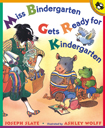
Finally, making friends and feeling that we belong is a very important aspect in the children’s normalization process in the Montessori classroom at the beginning of the year especially. So during the first 2-3 weeks of the school year, we also tackle this topic. The first thing is to get the children to know each other’s names as quickly as possible. Especially for the newcomers. I like to read Miss Bindergarten Gets Ready for Kindergarten by Joseph Slate and Ashley Wolff.
On a practical level, Montessori has always believed that the Practical Life Exercises (PLE) were essential to her method as they provide a sane and wholesome range of activities which allow the children to develop control and coordination of movement, awareness of their environment, orderly thought patterns, independent work habits, responsibility etc.. All these can only be attained through spontaneous purposeful work.
And this is what we work on in particular during the first 2 weeks:
- How to wash hands at the sink
- How to use the bathroom
- How to work on a table
- How to work on a rug and walk around it to respect each other’s work
- How to stand in line to wash hands, wash dishes, use the bathroom
- How to walk around a rug?
- How to get the teacher's attention
- How to get the teacher's attention
What else do we focus on? Well, of course, I feel it is very important to teach the children how to tidy their classroom, clean it and organise it. And we nip it in the buds straight away, from the first week at preschool. Everything in our classroom (like in any other Montessori classroom) has a place, and it stays in the same place all year, so that children can find things and put them away more easily. During the first few weeks of school, children explore almost all of the main materials in our classroom while learning rules for using them.
I do a lesson for each center before the kids use the materials, and we go over each center’s rules every day for the first few weeks. The first day of school, I split the class in 2 halves. My assistant takes half of the children to the practical Life Exercises and the Sensorial Centres and I take the other half to the maths and Literacy centers (afterwards, we switch). We show them where everything goes, and we explain safety rules. We take a few things down and put them away asking the children if they remember where they go. Then, each child is given one or more items from that center and the children take turns putting them away. There are times when we have to repeat this. These lessons last as long as needed. There is no set end time for beginning school lesson.
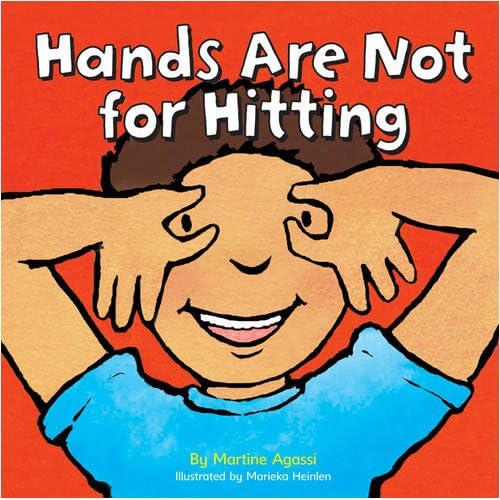
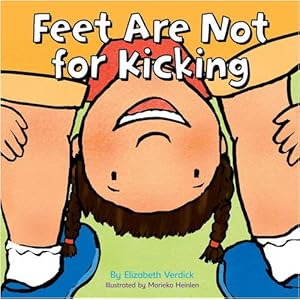
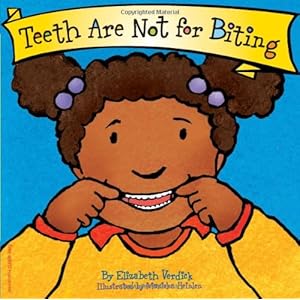
Another great way to introduce the rules is to read from the series of books titled The Best Behavior series (click here to have a look on Amazon.co.uk). There are many books in this series that address behaviors such as sharing, cleaning-up, kicking, hitting, biting, and unkind words. I read one of them every day at the beginning of the year during circle time
Finally, making friends and feeling that we belong is a very important aspect in the children’s normalization process in the Montessori classroom at the beginning of the year especially. So during the first 2-3 weeks of the school year, we also tackle this topic. The first thing is to get the children to know each other’s names as quickly as possible. Especially for the newcomers. I like to read Miss Bindergarten Gets Ready for Kindergarten by Joseph Slate and Ashley Wolff.
In the story, the teacher has 26 students and each student's name begins with a different letter of the alphabet. In turn, each student is an animal that begins with that same letter of the alphabet. (Adam is an alligator, Brenda is a beaver) Their last names rhyme with how they're getting ready for school (Adam Krupp wakes up; Brenda Heath brushes her teeth). We identify students with names that matched the alphabet letters in the book or with names of animals. I write down each child’s name on a colourful card sheet, place a photo of the child beside it as well as a picture of an animal whose name starts with the same letter). By the time we are finished with the book, everyone will have heard everyone else's name, know the first letter of their name and their friends’ too. Don't worry, I will probably write a post on this activity too.
It would be interested if you could share with us what you do in yor classroom or at home at the beginning of the school year.
Saturday, September 3, 2011
OUr new SPHE corner
This first month at preschool is crucial to the establishment of positive dynamics in the classroom. And during that month, the emphasis is usually on the SPHE curriculum (soical, physical and health education). The curriculum is structured in such a way as t treat the dimensions of a child's life holistically. It aims at developing value, attitudes and skills important for a child's health and well-being as well as giving him/her the tools to deal with any situations he/she may encounter in a classroom, at home or out in the community. Because SPHE permeates all aspects of school life, the program is usually implemented all through the year. Depending on the objectives needed to be achieved, they may be introduced through a book, an art activity, a specific exercise on the PL shelves, a group game etc... and through the everyday happenings in the school and in the context of the classroom atmosphere.
To the purpose, I have added a SPHE corner in our classroom.

The tree will help me to represent all the different seasons and the concept of the changing weather. Of course, as the corner is new, I have been able to gather all the materials I would like. Not yet.. At the moment, this is where "official" materials can be found:
 |
| cards about the 5 senses |
 |
| dressing up teddy bears |
 |
| a game differentiating the tools used by various professionals |
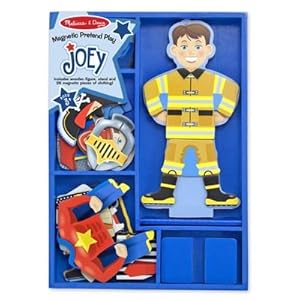 |
| dressing up game |
Yet, the whole program is presented in a number of strand units that can be approached and studied informally through a wide range of activities across the classroom:
- Myself ( self identity, self awareness, taking care of my body, knowing about my body, food and nutrition, feelings and emotions, safety and protection)
- Myself and others (Myself and my family, my friends and other people, relating to others)
- Myself and the wider world (My school, my local community, the different continents)
And as I said at the beginning of this post, our first few weeks at preschool are going to be closely linked to several aspects of the SPHE program. Aspects which I consider essential to establish the foundations of our little "community" and a sense of belonging in our classroom. I wrapped all of these aspects in a monthly theme titled "All About Me" and I will dedicate 2 to 3 posts on the subject. SO keep in touch!!
Subscribe to:
Posts (Atom)